AI Prompt Library: Discover the Best AI Prompts for Writing, Images, Videos, and More
- 14 min read
Artificial intelligence is changing the way people write, design, create videos, develop software, and complete everyday tasks. Tools such as ChatGPT and AI image generators can produce impressive results, but the quality of their output often depends on the instructions they receive.
These instructions are known as prompts.
Finding the right prompt can sometimes be difficult, especially when you are working on a new project or trying an AI tool for the first time. This is where an AI prompt library becomes useful.
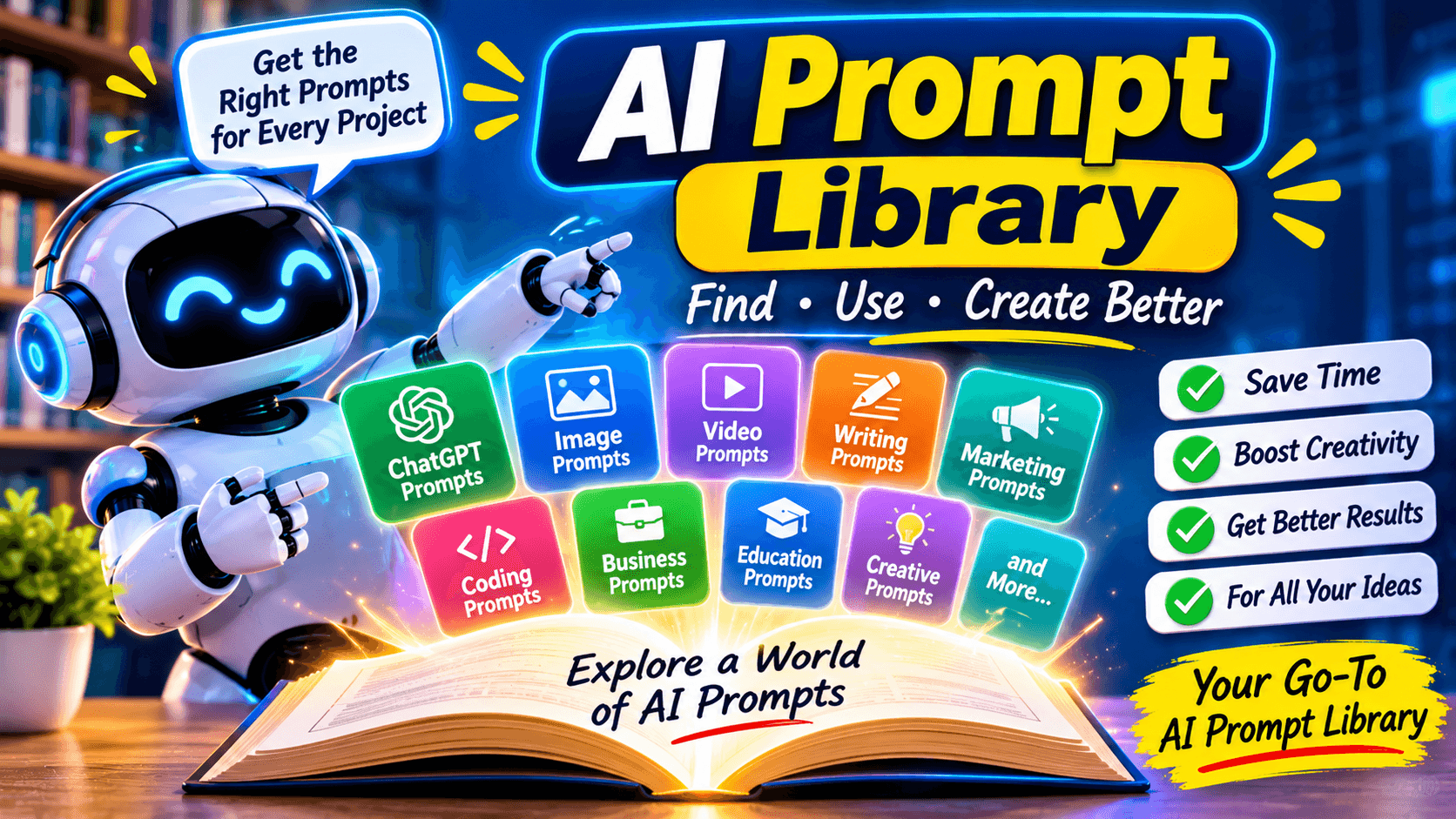
An AI prompt library is a collection of ready-to-use instructions designed to help people get better results from artificial intelligence tools. Instead of creating every instruction from scratch, users can explore different categories, copy useful prompts, and customize them according to their needs.
Whether you want to write blog articles, generate realistic images, create cinematic videos, develop marketing campaigns, or write computer code, a well-organized prompt library can save time and provide creative inspiration.
In this guide, we will explain how AI prompt libraries work, explore their most useful categories, share practical prompt examples, and show you how to create your own collection.
What Is an AI Prompt Library?
An AI prompt library is an organized collection of instructions that users can give to artificial intelligence tools to complete specific tasks.
These prompts can be simple questions, detailed instructions, creative descriptions, or multi-step workflows.
For example, a basic instruction might be:
"Write an article about digital marketing."
A more detailed prompt could be:
"Act as an experienced digital marketing writer. Write a beginner-friendly article about digital marketing strategies for small businesses. Include practical examples, clear headings, useful tips, and a conclusion. Use simple language and avoid unnecessary technical terms."
The second prompt provides more context and explains exactly what the user expects.
An AI prompt library stores different instructions so users can find suitable examples for specific tasks.
Common prompt library categories include:
- ChatGPT prompts
- AI writing prompts
- AI image generation prompts
- AI video prompts
- Marketing prompts
- Business prompts
- Coding prompts
- Education prompts
- Creative writing prompts
- Social media prompts
A good library makes it easier to discover, organize, and reuse instructions.
Why Do You Need an AI Prompt Library?
Many people use AI tools but do not always know how to communicate their requirements clearly. A prompt library helps solve this problem by providing structured examples.
Here are some important benefits.
1. Save Time
Writing detailed instructions can take time, especially when you work on several projects.
A prompt library gives you access to existing examples that you can copy and customize. You do not need to start from a blank page every time.
2. Improve AI Results
Clear instructions help AI tools understand your requirements.
A well-written prompt can explain the desired tone, format, audience, topic, and output. This gives the AI a better starting point for producing useful results.
3. Discover New Ideas
Sometimes the biggest challenge is deciding what to create.
Exploring different AI prompts can introduce new writing topics, image concepts, video ideas, marketing strategies, and creative projects.
4. Help Beginners Use AI Tools
People who are new to artificial intelligence may not know how to write effective prompts.
Ready-to-use examples make it easier to experiment with AI tools without learning advanced prompt engineering techniques first.
5. Support Different Projects
A single prompt library can support multiple types of work.
A content creator may use it for YouTube scripts, while a designer may explore image generation prompts. Business owners can use marketing instructions, and developers can find coding examples.
Best AI Prompt Library Categories
Different projects require different types of instructions. Organizing prompts into categories makes it easier to find the right one.
Here are some of the most useful categories to explore.
1. ChatGPT Prompts
ChatGPT prompts help users communicate with conversational AI tools.
They can be used for writing, research, brainstorming, learning, planning, and everyday productivity.
Example prompt:
"Act as a professional content writer. Generate ten original blog post ideas about [topic]. For each idea, provide an interesting title, target audience, search intent, and a short description."
Other useful ChatGPT prompt ideas include:
- Blog writing prompts
- Email writing prompts
- Business planning prompts
- Study and learning prompts
- Creative brainstorming prompts
- Research assistance prompts
2. AI Image Generation Prompts
AI image prompts describe the visual content you want an image generator to create.
They can include the main subject, background, lighting, camera angle, colors, composition, and artistic style.
Example prompt:
"Create a highly realistic cinematic image of a futuristic city at sunset. Show modern skyscrapers, flying vehicles, glowing advertisements, and busy streets. Use dramatic lighting, realistic reflections, detailed architecture, and a wide cinematic composition."
AI image prompts are useful for:
- Website featured images
- Social media graphics
- Digital artwork
- Product photography
- Character designs
- Fantasy illustrations
- Marketing visuals
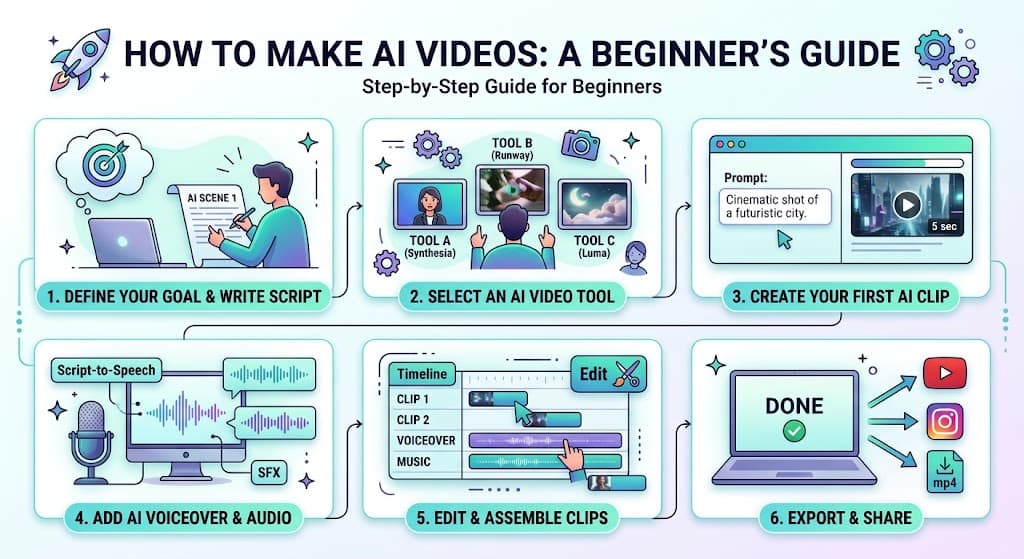
3. AI Video Prompts
Video prompts help users describe scenes, actions, and movements for AI video generation tools.
A good video prompt explains what happens in the scene and how the camera should capture it.
Example prompt:
"Create a cinematic video showing a golden retriever running through a green field during sunset. The camera follows the dog from a low angle as the grass moves gently in the wind. Use warm natural lighting, realistic movement, and smooth cinematic camera tracking."
Other video prompt categories include:
- Cinematic video prompts
- YouTube Shorts prompts
- Product advertisement prompts
- AI animation prompts
- Horror video prompts
- Fantasy movie prompts
- Animal video prompts
4. AI Writing Prompts
Writing prompts help generate written content for websites, blogs, businesses, and personal projects.
They can support different writing styles and content formats.
Example prompt:
"Write a detailed beginner-friendly guide about [topic]. Start with an interesting introduction, explain the main concepts using clear headings, provide practical examples, and finish with a useful conclusion."
Popular writing prompt ideas include:
- SEO article prompts
- Product description prompts
- Storytelling prompts
- Poetry writing prompts
- Website content prompts
- Professional email prompts
- Creative writing prompts
5. Marketing Prompts
Marketing prompts help businesses develop promotional content, advertising ideas, and customer communication.
Example prompt:
"Act as a digital marketing strategist. Create a seven-day social media marketing plan for [business]. Include daily post ideas, captions, suggested visuals, audience targeting ideas, and calls to action."
These prompts can help with:
- Facebook advertising
- Instagram captions
- Email marketing
- Product launches
- Brand positioning
- Marketing strategies
- Promotional campaigns
6. Coding and Programming Prompts
Developers can use AI prompts to explain programming problems, generate code examples, identify errors, and understand technical concepts.
Example prompt:
"Act as an experienced web developer. Create a responsive HTML, CSS, and JavaScript calculator. Explain the main functions, use clean code, and make sure the layout works on mobile and desktop screens."
Useful coding prompt categories include:
- HTML and CSS prompts
- JavaScript prompts
- Python coding prompts
- WordPress development prompts
- Debugging prompts
- Database prompts
- Website optimization prompts
7. Business and Productivity Prompts
Business prompts can help users organize their work, prepare plans, and improve daily productivity.
Example prompt:
"Act as a business consultant. Create a practical business growth plan for a small online business selling [product]. Include customer research, marketing ideas, operational priorities, and measurable goals."
Other useful ideas include:
- Business plan generation
- Project management
- Customer support
- Meeting summaries
- Business emails
- Product research
- Daily planning
8. Education and Learning Prompts
Students, teachers, and independent learners can use AI prompts to understand difficult subjects and organize study activities.
Example prompt:
"Act as a patient teacher. Explain [subject] to a beginner using simple language, real-world examples, and step-by-step explanations. Finish with five practice questions and their answers."
Education prompts can support:
- Study guides
- Language learning
- Quiz generation
- Lesson planning
- Subject explanations
- Exam preparation
- Research organization
20 Ready-to-Use AI Prompts for Everyday Tasks
You can start experimenting with AI immediately using these practical examples.
Writing and Content Creation
1. Blog Article Prompt
"Write a helpful and original blog article about [topic]. Use a clear introduction, descriptive headings, practical examples, and a useful conclusion. Make the content easy for beginners to understand."
2. SEO Title Prompt
"Generate 15 engaging SEO title ideas for an article about [keyword]. Make the titles clear, relevant, and interesting without using misleading claims."
3. Social Media Caption Prompt
"Write ten engaging social media captions about [topic]. Use a friendly tone, natural language, and relevant calls to action."
4. Story Writing Prompt
"Write an original short story about [idea]. Include interesting characters, an engaging opening, a meaningful conflict, and a satisfying ending."
Image and Design Creation
5. Realistic Image Prompt
"Create a photorealistic image of [subject] in [location]. Include detailed textures, natural lighting, realistic shadows, and professional composition."
6. Logo Design Prompt
"Develop five creative logo concepts for a brand called [brand name]. Explain the visual style, typography, icon concept, and suggested color palette."
7. Product Photography Prompt
"Create a premium commercial product photography concept for [product]. Use a clean background, professional studio lighting, realistic shadows, and detailed product textures."
Video Creation
8. YouTube Video Script Prompt
"Write a YouTube video script about [topic]. Include a strong opening hook, interesting main sections, suggested visuals, voiceover, and a clear conclusion."
9. Cinematic Video Prompt
"Describe a cinematic scene featuring [subject] in [environment]. Include camera movement, lighting, atmosphere, subject actions, and realistic environmental details."
10. Advertisement Video Prompt
"Create a 30-second advertisement script for [product or service]. Include an attention-grabbing opening, key benefits, suggested scenes, voiceover, and a strong call to action."
Marketing and Business
11. Marketing Strategy Prompt
"Create a practical marketing strategy for [business]. Include target audience, content ideas, marketing channels, promotional activities, and ways to measure performance."
12. Email Marketing Prompt
"Write a professional promotional email about [product or service]. Include an engaging subject line, a clear explanation of benefits, and a natural call to action."
13. Business Idea Prompt
"Generate ten practical online business ideas for someone with skills in [skill]. Include the target customers, required resources, and possible ways to earn revenue."
Learning and Productivity
14. Study Plan Prompt
"Create a 30-day study plan for learning [subject]. Divide the subject into manageable daily lessons and include revision activities and practice tasks."
15. Language Learning Prompt
"Act as a language tutor. Help me learn [language] from beginner level. Teach five useful words each day, provide example sentences, and give me short practice exercises."
16. Daily Schedule Prompt
"Create a balanced daily schedule for someone who needs to complete [tasks]. Organize activities by priority and include reasonable breaks."
Creative and Entertainment
17. Poetry Prompt
"Generate ten original poetry ideas about love, nature, dreams, and personal growth. Make each idea suitable for creative writing practice."
18. Fantasy Character Prompt
"Create a detailed fantasy character with a unique appearance, personality, background, abilities, and personal goals. Describe the character in a way that can be used for visual storytelling."
19. Horror Story Prompt
"Write a suspenseful horror story about [idea]. Build tension gradually, use atmospheric descriptions, and finish with an unexpected twist."
20. Creative Brainstorming Prompt
"Act as a creative brainstorming partner. Generate 20 unusual ideas for [project]. Explain each idea briefly and highlight the most practical concepts."
How to Choose the Right AI Prompt
Not every prompt works equally well for every task. Choosing an appropriate instruction can make your workflow more effective.
Consider these factors before selecting a prompt.
Understand Your Goal
First, decide what you want the AI to do. Are you writing an article, generating an image, creating a video, or solving a programming problem?
Your goal determines the type of prompt you need.
Select the Correct Category
Explore a prompt library and select the category that matches your project.
For example, choose an image generation prompt for artwork rather than using a general writing prompt.
Check the Level of Detail
A useful prompt should provide enough information about the expected result.
For complex tasks, include details such as the audience, format, tone, length, visual style, or technical requirements.
Customize the Instructions
Ready-made prompts are starting points. Replace placeholders with your own information and adjust the instructions according to your needs.
Test and Improve
AI tools may interpret instructions differently. Test the prompt, review the result, and improve the wording if necessary.
How to Create Your Own AI Prompt Library
Creating a personal prompt collection is a practical way to save useful instructions for future projects.
Follow these steps.
Step 1: Identify Your Main Activities
List the tasks you perform regularly. These might include blog writing, image generation, video creation, marketing, or coding.
Step 2: Create Separate Categories
Organize prompts into folders or sections. For example, create separate categories for ChatGPT, images, videos, business, and education.
Step 3: Save Useful Prompts
Whenever you discover an instruction that produces a useful result, save it in the relevant category.
Step 4: Use Clear Names
Give every prompt a descriptive title. Names such as "YouTube Shorts Script Generator" or "Realistic Product Image Prompt" make searching easier.
Step 5: Add Customization Fields
Use placeholders such as [topic], [audience], [product], and [video duration]. This allows you to reuse the same instruction for different projects.
Step 6: Review Your Collection
Remove outdated examples, improve unclear instructions, and update prompts as your requirements change.
A well-organized library becomes more valuable as you discover new ways to use artificial intelligence.
What Makes a Good AI Prompt Library?
A useful AI prompt library should be more than a long list of instructions. It should make finding and using prompts simple.
Look for these features:
Organized categories: Prompts should be grouped according to their purpose.
Copy-ready instructions: Users should be able to copy prompts without unnecessary editing.
Clear descriptions: Each prompt should explain what it does and when to use it.
Customization options: Prompts should contain editable fields for personal requirements.
Regular updates: New examples should be added as AI tools and creative workflows develop.
Practical examples: Showing sample results or use cases helps beginners understand how a prompt works.
Easy navigation: Search and filtering features can help users find relevant instructions quickly.
Common Mistakes When Using AI Prompt Libraries
Even a good collection cannot guarantee perfect results. Avoid these mistakes when working with ready-made prompts.
Copying Without Customizing
A prompt written for another project may not match your requirements. Always replace example information with relevant details.
Giving Too Little Context
General instructions may produce generic answers. Explain the task, expected format, and important requirements.
Expecting Perfect Results Every Time
AI tools can misunderstand instructions or generate inaccurate information. Review important results before using or publishing them.
Ignoring Tool Compatibility
Different AI tools have different capabilities. A prompt designed for image generation may not work properly in a text-only assistant.
Forgetting Privacy and Copyright
Avoid entering passwords, confidential business information, or private customer data into AI tools without appropriate safeguards. Also review the usage rights of generated and referenced content.
Frequently Asked Questions About AI Prompt Libraries
What is the best AI prompt library?
The best AI prompt library is one that provides organized, practical, and easy-to-use instructions for different tasks. Look for categories covering writing, images, videos, business, coding, and education.
Are AI prompt libraries free?
Some prompt libraries provide free access, while others offer premium collections or subscription plans. Always check the access conditions before using a service.
Can I use an AI prompt library with ChatGPT?
Yes. Many prompt collections contain instructions that can be copied into ChatGPT. You can also customize them to suit your requirements.
How do I find prompts for AI image generation?
Look for an image generation category. Useful prompts usually describe the subject, environment, lighting, composition, visual style, and other important details.
Can beginners use AI prompts?
Yes. Ready-to-use prompts are especially helpful for beginners because they provide examples of how to communicate instructions to AI tools.
What is the difference between an AI prompt and an AI prompt library?
An AI prompt is an individual instruction given to an artificial intelligence tool. An AI prompt library is a collection of multiple prompts organized for different tasks and purposes.
Can I create my own AI prompt library?
Yes. You can create a personal collection using documents, spreadsheets, folders, or a dedicated prompt management platform. Organize your instructions by category and save the examples that produce useful results.
Conclusion
An AI prompt library can make artificial intelligence easier to use by bringing useful instructions together in one organized place.
Whether you are a blogger, designer, student, developer, marketer, or video creator, the right prompts can help you save time, explore new ideas, and improve your creative workflow.
From ChatGPT writing instructions to cinematic video prompts and realistic image descriptions, there are countless ways to use prompt collections in everyday projects.
Start with a category that matches your needs, experiment with different instructions, and customize the examples to achieve better results.
If you are looking for creative ideas and ready-to-use AI instructions, explore Qissanect.com. Discover useful prompts, explore different AI categories, and find inspiration for your next project.
The best way to learn prompt writing is to experiment. Start with one prompt today and see what you can create.